
Back to Blog
Jewelry Guide
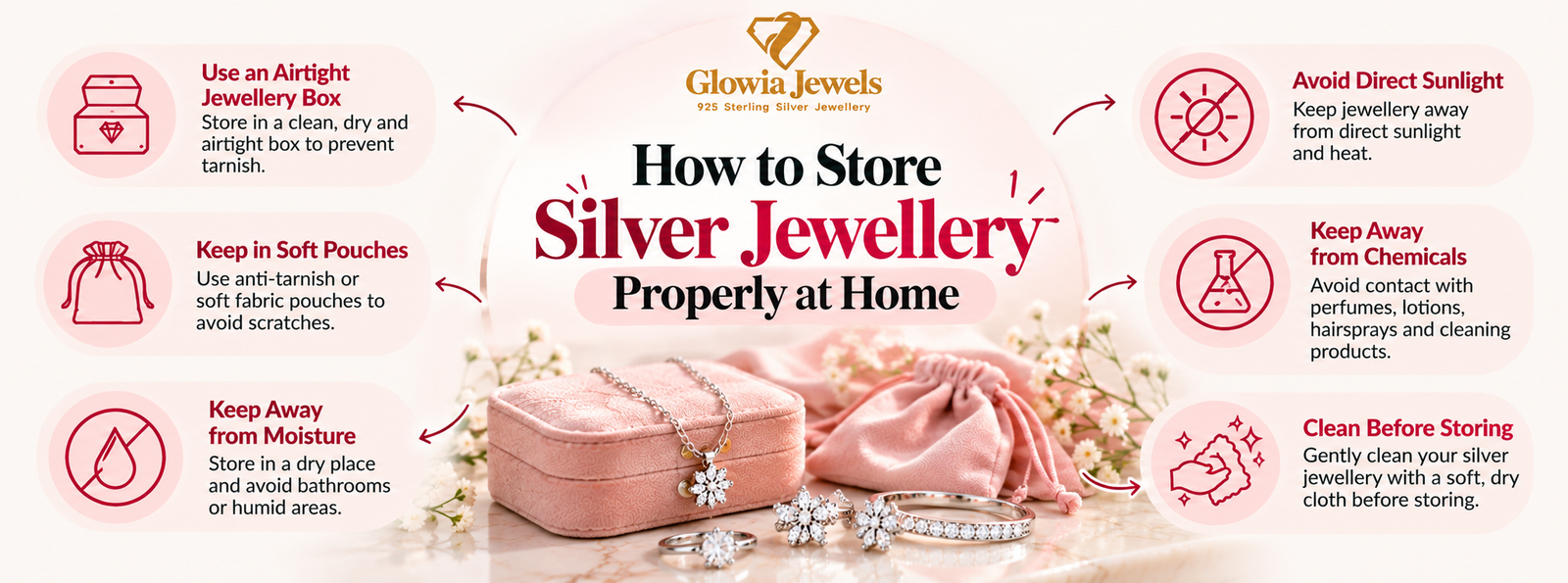
How to Store Silver Jewellery Properly at Home: Simple Tips to Prevent Tarnishing
Silver jewellery has a special place in many jewellery collections. A simple silver ring, a delicate necklace or a pair of beautiful earrings can become an everyday favourite. But have you ever taken out a necklace you had not worn for weeks and noticed that it looked darker, duller or tangled?
This is where proper jewellery storage makes a difference.
Many people focus on cleaning their silver jewellery but forget that the way they store it also affects its appearance. Exposure to moisture, air pollutants, cosmetics and unsuitable storage materials can contribute to tarnishing. Poor organisation can also cause scratches, tangled chains and damaged clasps.
The good news is that protecting your favourite pieces does not require an expensive jewellery box or a complicated routine. With a few simple habits, you can keep your silver jewellery organised, reduce tarnishing and make it easier to enjoy every piece in your collection.
In this guide, we will explore how to store silver jewellery properly at home and the common mistakes worth avoiding.
1. Clean Your Silver Jewellery Before Putting It Away
One of the easiest ways to care for silver jewellery is to clean it gently after wearing it.
During the day, jewellery comes into contact with natural skin oils, sweat, dust, perfume and moisturisers. When these residues remain on the surface, they can contribute to dullness and may make cleaning more difficult later.
Before storing your jewellery, wipe it with a soft, clean, lint-free cloth. Pay particular attention to rings, necklace clasps and bracelet closures, as these areas can collect residue.
If a piece needs a more thorough cleaning, follow the care instructions provided by the seller. Always make sure the jewellery is completely dry before putting it away.
This small habit takes less than a minute but can help keep your collection in better condition over time.
2. Choose a Cool and Dry Place
Where you store your silver jewellery matters.
A bathroom shelf might seem convenient, especially when you get ready in front of the mirror. However, bathrooms often experience high humidity because of showers and running water. Damp conditions can encourage tarnishing and may affect other jewellery components.
Instead, choose a dry location such as a bedroom drawer, dressing table or cupboard away from direct sunlight and heat sources.
Try to keep your jewellery away from kitchen fumes, household cleaning products and damp windowsills.
If you live in a particularly humid environment, a suitable sealed storage container and an appropriate moisture-absorbing product may help. Ensure that the jewellery is dry before storing it, and follow the product's safety instructions.
The aim is simple: give your silver jewellery a stable, dry environment where it is protected when you are not wearing it.
3. Store Each Piece Separately
Putting all your jewellery into one box may save space, but it can also create unnecessary problems.
Necklace chains can become tangled, rings can scratch one another, and earrings can disappear among other accessories. Trying to separate tangled pieces can sometimes bend delicate links or damage clasps.
A better approach is to give every piece its own space.
Use individual soft pouches, small boxes or a jewellery organiser with separate compartments. Store rings in ring slots, keep earrings together as pairs and place bracelets where they cannot catch on other pieces.
Necklaces need particular attention because fine chains can knot easily. Fasten the clasp when practical and lay the chain flat or hang it separately.
Organising your jewellery this way protects its surface and saves time when you want to find a particular piece.
4. Use Anti-Tarnish Pouches for Extra Protection
Silver can gradually develop a darker surface when it reacts with sulfur-containing substances in the surrounding environment. This process is known as tarnishing.
Although tarnishing is natural, the right storage materials can help slow it down.
Anti-tarnish pouches, suitable storage cloths and specially designed jewellery bags can offer additional protection. For pieces that you wear only occasionally, individual protective storage can be especially useful.
You can also use clean, dry, airtight bags to reduce exposure to air and moisture.
Remember these simple precautions:
- Make sure every piece is completely dry before sealing it away.
- Choose soft materials that will not scratch the jewellery.
- Keep jewellery away from rubber products and other materials that may contribute to tarnishing.
- Inspect stored pieces occasionally, especially during humid weather.
These methods can reduce tarnishing, although they cannot guarantee that silver will never change colour.
5. Give Silver Necklaces Special Attention
Necklaces are among the easiest jewellery pieces to tangle, especially when they have fine chains or small pendants.
If you have ever spent several minutes separating two tangled necklaces, you already know why proper storage matters.
Start by fastening the clasp before putting the necklace away. Place the chain flat in an individual pouch or use a necklace organiser with separate hooks.
For necklaces with pendants, make sure the pendant does not rub against another piece or catch on nearby chains.
Avoid throwing several necklaces into a single compartment, even if you plan to wear them again soon. Repeated tangling can put unnecessary pressure on delicate links.
A little organisation helps preserve the chain, protects the pendant and makes your favourite necklace easier to wear whenever you need it.
6. Store Rings, Earrings and Bracelets Correctly
Different jewellery designs benefit from different storage arrangements.
Silver rings: Keep rings in individual slots or padded compartments. This reduces contact between pieces and helps protect decorative settings.
Silver earrings: Store earrings as pairs and secure their backs where possible. Small compartments or dedicated earring organisers can prevent them from getting lost.
Silver bracelets: Keep chain bracelets separate from rigid bangles. Close clasps where practical and avoid placing heavy items on top of delicate designs.
925 silver jewellery with gemstones: Give these pieces additional protection. Stones, adhesives and special finishes may require different care methods, so check the seller's instructions before cleaning or storing them.
The goal is not to create a complicated system. Even a simple organiser with separate sections can make a noticeable difference.
7. Keep Silver Jewellery Away From Perfume and Cosmetics
Perfume, moisturisers, hair sprays and other personal-care products can leave residue on jewellery. Certain ingredients may also affect silver or damage particular finishes.
For this reason, it is better to apply perfume, lotion and hair products before putting on your jewellery.
When you remove your accessories, wipe away any visible residue before returning them to their storage place.
Also, avoid keeping silver jewellery directly beside open cosmetic containers or household cleaning chemicals. A jewellery drawer should be a clean storage area rather than a place to keep products that might spill or leak.
These small precautions help reduce residue buildup and protect your jewellery between wears.
8. Understand Why 925 Sterling Silver Can Tarnish
If you own 925 sterling silver jewellery, you may occasionally notice a darker colour developing on the surface.
This is usually associated with the natural tarnishing process. Sterling silver contains 92.5% silver and typically 7.5% other metals, often copper, which helps improve its suitability for jewellery.
Silver can react with sulfur-containing substances in the environment, and the resulting surface layer may appear grey, brown or black.
Tarnishing does not automatically mean your jewellery is fake or poor quality. Likewise, jewellery that remains shiny is not necessarily proof of authenticity.
Proper storage helps reduce exposure to conditions that encourage tarnishing, but the rate can vary depending on the environment, materials and finish.
If your jewellery becomes tarnished, use a cleaning method suitable for the specific piece. Avoid aggressive polishing, particularly if the item has gemstones, plating or intentionally darkened decorative details.
9. Pack Silver Jewellery Carefully When Travelling
Travel can expose jewellery to extra movement, humidity and accidental damage.
Whether you are attending a wedding, going on holiday or travelling for work, avoid carrying loose silver jewellery in your handbag or suitcase.
A small travel jewellery case with separate compartments is a practical option. Individual pouches also work well for keeping pieces apart.
Before packing, clean and dry your jewellery, fasten necklace and bracelet clasps, and separate delicate chains from heavier accessories.
When you arrive at your destination, store the jewellery in a dry, secure place rather than leaving it loose inside your luggage.
If you remove jewellery at a hotel, keep it in the same designated pouch or case instead of placing it on a bedside table or bathroom counter. This simple habit can help prevent loss as well as damage.
10. Avoid Common Jewellery Storage Mistakes
Even if you clean your jewellery regularly, a few everyday habits can affect its condition.
Leaving jewellery exposed: Keeping silver on an open dressing table for long periods exposes it to dust and environmental contaminants.
Storing damp jewellery: Moisture should be removed before a piece goes into a box or pouch.
Mixing everything together: Unorganised storage increases the risk of scratches, tangled chains and damaged clasps.
Using unsuitable materials: Some fabrics, packaging and household materials may scratch silver or contribute to tarnishing. Choose clean, jewellery-safe storage materials.
Forgetting about rarely worn pieces: Jewellery kept in storage for months can still develop tarnish. Check your collection periodically.
Polishing too aggressively: Excessive polishing can wear away metal or affect special finishes. Choose a suitable cleaning method and follow its instructions.
Avoiding these mistakes does not require much effort. A clean, dry storage area and a little organisation are often enough to improve your jewellery-care routine.
11. Create a Simple Silver Jewellery Storage Routine
The easiest routine is one that fits naturally into your everyday life.
After wearing your jewellery, wipe it gently with a soft cloth and return it to its designated place.
Once a week, check frequently worn pieces for residue, tangles or loose clasps.
Once a month, inspect jewellery you rarely wear and make sure the storage area remains dry and clean.
Before putting away a special-occasion piece for a long period, clean it appropriately, dry it completely and store it in a separate pouch.
You can keep a polishing cloth near your jewellery organiser so that caring for your accessories feels convenient rather than time-consuming.
With a little consistency, you can protect your collection without spending hours cleaning or rearranging it.
Frequently Asked Questions
Should silver jewellery be stored in an airtight bag?
A clean, dry airtight bag can help reduce exposure to air and moisture, potentially slowing tarnishing. Ensure that the jewellery is completely dry before sealing it inside.
Why does silver jewellery turn black in storage?
Silver can react with sulfur-containing substances in the environment, forming a dark tarnish layer. Storage conditions and contact with certain materials can influence how quickly this happens.
Can I keep silver jewellery in a wooden box?
It depends on the wood, finish and lining. Some woods and storage materials may contribute to tarnishing. Consider using jewellery-safe pouches or a suitable lined compartment for additional protection.
How often should I clean stored silver jewellery?
Wipe jewellery after wearing it and clean it more thoroughly when needed. Occasionally inspect pieces that remain stored for long periods, but avoid unnecessary or aggressive polishing.
What is the best way to prevent silver jewellery from tarnishing?
Store clean, completely dry jewellery in a cool, dry place. Keep individual pieces separate, minimise exposure to unsuitable materials and consider anti-tarnish storage products where appropriate.
Final Thoughts
Properly storing silver jewellery is one of the simplest ways to protect the pieces you love. You do not need an expensive jewellery cabinet or a complicated maintenance routine. You simply need to keep your jewellery clean, dry, organised and protected from unnecessary exposure.
Start with a few easy habits: wipe your jewellery after wearing it, store necklaces separately, use suitable pouches and choose a dry location away from cosmetics and household chemicals.
These small steps can help reduce tarnishing, prevent tangles and keep your favourite accessories ready for everyday wear or special occasions.
At Glowia Jewels, choosing jewellery that suits your personal style is only the beginning. Taking care of your collection helps you enjoy those favourite pieces for longer and makes every jewellery choice feel more rewarding.


Comments (0)
Sabse pehle comment karo!
Leave a Comment