Back to Blog
Jewelry Guide
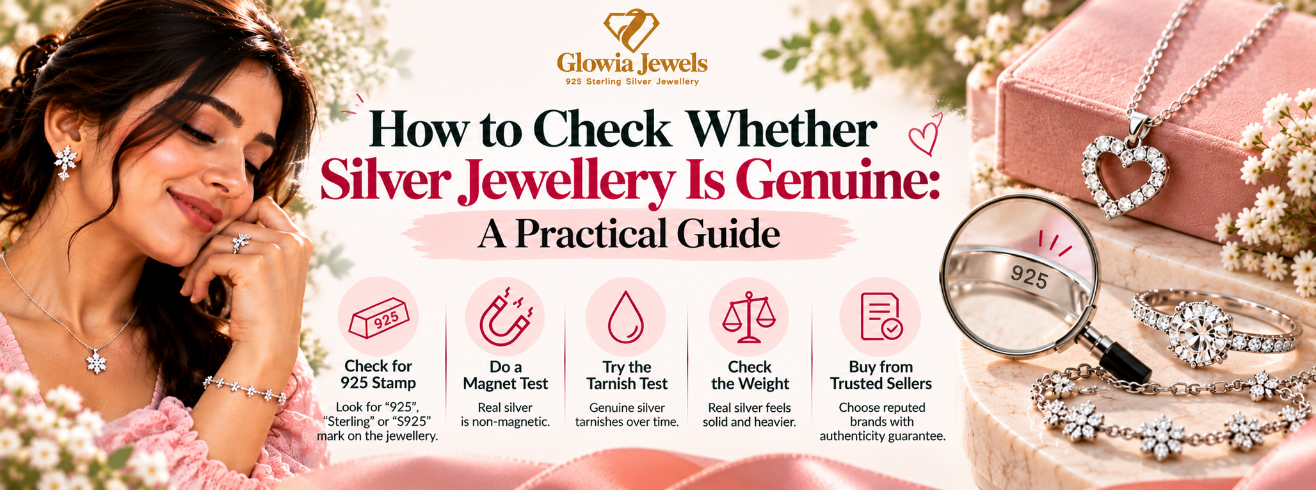
How to Check Whether Silver Jewellery Is Genuine: A Practical Guide
Have you ever looked at a beautiful silver ring or necklace and wondered whether it is actually made of real silver? You are not alone. With so many jewellery designs available online and in local markets, it can be difficult to tell the difference between genuine silver, silver-plated jewellery and pieces made from other metals.
The challenge is that many of these items look almost identical at first glance. A shiny finish does not necessarily mean that a piece contains real silver, and even jewellery that develops tarnish is not automatically genuine.
The good news is that there are several ways to check silver jewellery before making a purchase. Some checks can be done at home, while others require professional testing for a more reliable answer.
In this guide, we will explain how to identify genuine silver jewellery, what common markings mean, which home tests are useful, and what you should avoid when checking your favourite pieces.
1. Look for the 925 Sterling Silver Stamp
One of the first things to check is whether your jewellery has a purity mark.
You may find markings such as:
925: Indicates that the metal is intended to contain 92.5% silver.
Sterling Silver: Commonly used to identify jewellery made from sterling silver.
999: Generally indicates 99.9% silver, often found on fine-silver products.
The 925 mark is particularly common on rings, earrings, necklaces, bracelets and pendants. Sterling silver contains 92.5% silver and usually 7.5% other metals, often copper, to improve its strength.
You may find the stamp inside a ring band, near a necklace clasp, on a bracelet tag or on the back of a pendant.
However, there is one important detail to remember: a stamp alone does not prove that the jewellery is genuine. Counterfeit pieces can also carry purity markings. Treat the stamp as a useful first clue, not a guarantee.
2. Check the Colour and Finish Carefully
Genuine sterling silver typically has a natural, bright white metallic appearance. Depending on its finish, it may look highly polished, softly reflective or slightly matte.
Silver-plated jewellery can have a similar appearance, so colour alone cannot establish authenticity. Still, examining the surface can help you notice possible warning signs.
Look closely at areas that experience frequent contact, such as ring edges, bracelet clasps and necklace links. If you see a different-coloured metal underneath worn areas, the piece may have a surface coating over another metal.
Also check whether the colour appears consistent across the jewellery.
Keep in mind that genuine silver can be rhodium-plated or finished in other ways, and a well-made plated item may look convincing. For this reason, surface appearance should be considered alongside the product description, hallmark and seller information.
3. Understand What Tarnishing Can Tell You
Have you noticed a silver necklace gradually becoming darker after being stored for some time? That may be tarnishing.
Silver can react with sulfur-containing compounds in the air and develop a darker surface layer. Moisture, certain cosmetics and environmental conditions can influence how quickly this happens.
Genuine sterling silver can tarnish, but tarnishing does not prove that an item is real silver. Other metals and coatings can also change colour over time.
Similarly, jewellery that remains shiny is not necessarily fake. Protective finishes, storage conditions and regular cleaning can affect its appearance.
If your jewellery has developed a dark layer, try cleaning it gently with a soft cloth or a cleaner specifically suitable for sterling silver. Follow the manufacturer's instructions, particularly if the item includes gemstones, delicate details or plating.
Remember: Tarnishing is a clue about surface behaviour, not a definitive authenticity test.
4. Try the Magnet Test—with the Right Expectations
A simple magnet test is often mentioned as a way to check silver jewellery.
Silver is not strongly attracted to an ordinary magnet. Therefore, if a piece is strongly pulled toward a magnet, it may contain a magnetic metal that deserves further investigation.
However, this test has important limitations.
Many metals used in imitation jewellery are not magnetic either. Clasps and other small components may also contain different materials from the main body of the jewellery.
This means that a piece that does not stick to a magnet is not automatically genuine silver.
If you try this test at home, use a small magnet and avoid dragging it across delicate surfaces. Treat the result as an initial screening step rather than proof of purity.
5. Listen to the Sound—But Do Not Rely on It Alone
Some people use the sound of silver jewellery as another way to assess its material.
When gently tapped, certain silver items may produce a clear, ringing sound. Other metals may sound different depending on their shape, thickness and construction.
The problem is that sound changes significantly according to the item's size, design and weight. A thin chain will not sound like a solid silver coin or a thick ring.
For this reason, sound is not a reliable standalone test for jewellery.
Avoid dropping, striking or tapping delicate pieces forcefully just to test them. You could damage the setting, bend the item or loosen a gemstone.
6. Examine the Jewellery for Signs of Plating
Silver-plated jewellery has a thin layer of silver over a base metal. It can be attractive and affordable, but it is not the same as jewellery made from sterling silver throughout.
To look for possible plating, inspect the piece carefully under good lighting.
Pay attention to:
Edges that appear worn or unusually different in colour.
Scratches revealing a contrasting metal underneath.
Uneven colour around clasps or joints.
Product descriptions that use terms such as “silver finish” or “silver-tone” instead of specifying sterling silver.
None of these observations is conclusive on its own. Genuine silver jewellery can become scratched, and plated pieces can remain in good condition for a long time.
If the listing is unclear, ask the seller whether the item is made from 925 sterling silver or has a silver coating over another material.
A direct answer is much more useful than relying on appearance alone.
7. Be Careful With the Ice Test
You may have seen videos claiming that genuine silver melts ice unusually quickly because silver conducts heat very well.
Silver is indeed an excellent thermal conductor, and a suitable comparison can demonstrate this property. However, an ice test performed at home is not a dependable way to establish the purity of a small piece of jewellery.
The results depend on several factors, including the object's size, thickness, temperature and contact with the ice. Other metals can also transfer heat efficiently.
If you are curious, you can observe how different metal objects affect ice under similar conditions. Just do not use the result as confirmation that your ring or necklace is genuine.
A convincing social-media demonstration is not a substitute for a proper material test.
8. Avoid Risky DIY Chemical Tests
Some online guides recommend using bleach, acids or other household chemicals to test silver. These methods can be risky and may damage the jewellery.
Chemical testing can cause discolouration, surface damage or harm to gemstones and decorative finishes. Certain chemicals can also be hazardous to your skin and eyes.
Even a result that appears to indicate silver may not tell you the complete composition of the item.
If you suspect that a valuable piece is not genuine, do not experiment with household chemicals. A jeweller or professional testing service can recommend a suitable method based on the jewellery's construction and value.
Protecting the item is more important than trying every test you find online.
9. Ask for Professional Silver Testing
When you need greater confidence, professional testing is the most sensible option.
A qualified jeweller or reputable precious-metal testing service may use methods such as:
X-ray fluorescence (XRF): This technique can analyse the elemental composition of a metal without usually damaging the item. Results depend on the instrument, calibration and the surface being tested, so plating can sometimes complicate interpretation.
Specific chemical or assay tests: A professional may use an appropriate testing method to assess silver content. Some methods can leave a mark or require a small sample, so ask whether the test is destructive before proceeding.
Hallmark verification: Where applicable, checking recognised hallmark information can provide additional evidence about the declared purity.
If the jewellery is expensive, antique or especially valuable, ask what the test measures and whether it assesses only the surface or the underlying metal as well.
Professional testing is particularly useful when you plan to resell jewellery, purchase a high-value item or resolve a concern about authenticity.
10. Check the Seller Before Buying Silver Jewellery Online
You do not have to wait until jewellery arrives to start assessing whether it is genuine. The seller's information can help you make a better decision before placing an order.
Before buying, check the following details:
Material description: Does the listing clearly state 925 sterling silver or another specific material?
Purity information: Are the claimed silver content and product specifications explained?
Product photographs: Are there clear pictures of the actual design, including clasps, settings and markings where available?
Customer reviews: Do buyers describe the product's quality and whether it matches the listing?
Return policy: Can you return or exchange the item if it does not match the stated description?
Customer support: Can you contact the seller with questions about the metal composition?
Be cautious of listings that promise genuine silver but provide no meaningful material details.
Price alone is not a reliable indicator. A low price does not automatically mean that jewellery is fake, and a high price does not guarantee authenticity.
Choose a seller that explains what you are buying and provides clear information about its products.
11. Common Myths About Genuine Silver Jewellery
There are several popular beliefs about silver that can lead to confusion.
Myth 1: Real silver never changes colour.
Fact: Sterling silver can tarnish due to environmental exposure. Colour changes alone cannot determine authenticity.
Myth 2: If a magnet does not attract it, the jewellery is genuine.
Fact: Many non-silver metals are also non-magnetic. A magnet test cannot prove silver purity.
Myth 3: Every item marked 925 must be genuine.
Fact: The stamp is useful evidence, but false markings exist. Other checks may be necessary.
Myth 4: Real silver is always expensive.
Fact: Prices vary with weight, design, craftsmanship, market conditions and brand. Compare the material specifications instead of relying only on price.
Myth 5: Silver-plated jewellery is the same as sterling silver.
Fact: Silver-plated jewellery has a silver layer over another material, whereas sterling silver is an alloy containing 92.5% silver throughout the material.
Understanding these differences makes it easier to evaluate jewellery without being misled by common claims.
12. A Quick Checklist for Checking Genuine Silver
Before buying or assessing a piece of silver jewellery, use this simple checklist:
Look for a 925 or sterling silver marking.
Read the material description carefully.
Examine the finish and any worn areas.
Treat magnet and tarnish tests as clues, not proof.
Check the seller's reputation and return policy.
Ask for professional testing if authenticity remains uncertain.
No single visual clue or household test can reliably confirm every piece of silver jewellery. Combining several checks gives you a better starting point, while professional testing offers stronger evidence when certainty matters.
Final Thoughts
Knowing how to check whether silver jewellery is genuine can help you shop more confidently and protect your money. Start by checking the 925 marking, reading the material description and examining the finish. Be cautious about popular home tests, because many can provide misleading results when used alone.
If you are buying online, choose a seller that communicates clearly about metal purity, product details and returns. If you already own a valuable piece and have doubts about its composition, consult a qualified professional rather than risking damage with chemical experiments.
At Glowia Jewels, taking the time to understand silver jewellery can help you choose pieces that suit your preferences and make informed decisions before purchasing. Look beyond the shine, ask the right questions and give genuine material information the attention it deserves.
After all, a beautiful piece of jewellery is even more satisfying when you understand what it is made of and why you chose it.

Comments (0)
Sabse pehle comment karo!
Leave a Comment